
When you think of surgery, the very idea probably conjures up something regarding scars. From a small procedure or something major, the thought of scars following surgery is a fear for many patients. But what if there were a way to reduce or even avoid this scarring? Enter single-port surgery. Single-port surgery (also called single-incision laparoscopic surgery, or SILS) has become popular in recent years, particularly for operations like gallbladder and hernia repair and some types of colorectal surgery. One of the biggest questions that patients ask, however, is: Does single-port surgery leave scars?
The current frequency of laparoscopic usage was 94.0% on bariatric, 83.7% on antireflux, 79.2% on appendectomy, and 77.1% cholecystectomy; however, the use dropped to 52.4% during colectomy and even fell below it with rates converging at considerably lower percentages for ventral hernia repair (28.1%),51 rectal resection (18•3%). In-hospital mortality was highest in colorectal resection (. 38%-. 58%), says PubMed Central.
In this post, we’re going to dive deep into single-port surgery – showing how it works, if there are scars, and what recovery and cosmetic outcomes you can expect.
What is Single-Port Surgery?
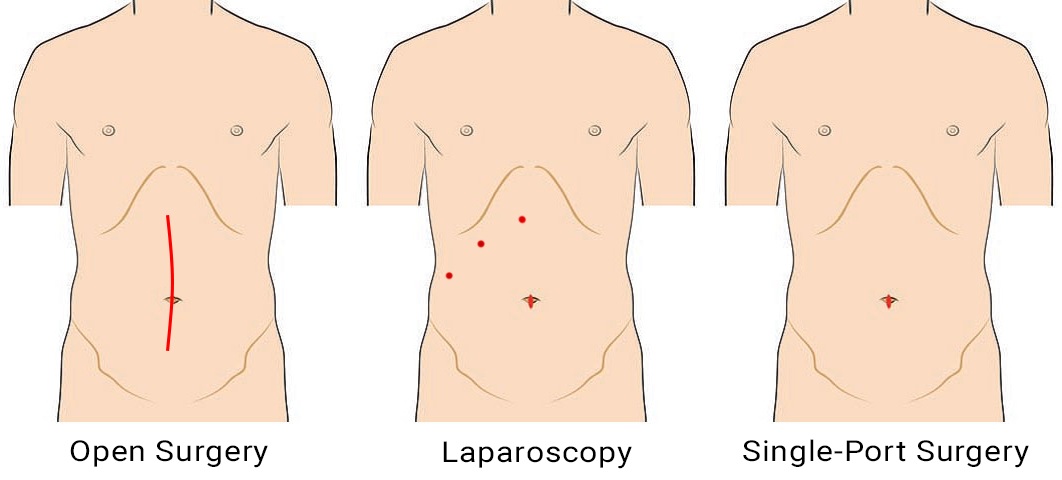
Single-port surgery is a laparoscopic surgical technique where, instead of 5 laparoscopic incisions like it’s been done for more than 20 years now, there has been an effort by surgeons to perform surgeries through only one incision. Unlike traditional laparoscopic procedures that uses multiple incisions, single-port surgery involves only one tiny incision, which may decrease complications and, for a bariatric patient, result in a faster recovery after bariatric surgery.
Key Features of Single-Port Surgery:
- Less Invasive: A single incision rather than multiple.
- Cosmetic Advantages: The incision is generally concealed in the belly button (umbilicus).
- Smaller Incision/ Improved Recovery Time: The fewer the number of incisions, the less trauma to the body.
- Less Pain: Patients experience much less pain compared to traditional multi-port laparoscopic surgery.
Types of bariatric Surgeries Performed with Single-Port Surgery:
- Gallbladder removal (Cholecystectomy)
- Hernia repairs
- Colon and rectal surgery
- Some gynecological surgeries
- Bariatric surgery
Does Single-Port Surgery Leave Scars?: Let’s Find Out
The quick answer is yes, single-port surgery can cause a scar, but it’s generally much less visible than scars left by traditional multi-incision surgeries.
Factors That Impact Scarring:
- Size of Incision: The incision is smaller than conventional surgery; how the final scar appears depends upon the size of the incision and your body’s ability to heal.
- Healing and Aftercare: Following your surgeon’s instructions for keeping your wound site clean, as well as good aftercare practices in general, can minimize the appearance of scars.
- Your Skin Type and Genetics: Patient skin types recovers differently. Some patients may scar worse than others.
Surgical Technique: In addition, the expertise and artistry of the surgeon is critical in minimizing scars.
Scarring Compared to Traditional Surgery
| Procedure Type | Number of Incisions | Incision Length | Scar Appearance |
| Traditional Laparoscopic | 3-4 incisions | 1-2 cm each | Multiple small scars |
| Single-Port Surgery | 1 incision | 2-3 cm (or less) | One scar, often hidden |
| Open Surgery (Traditional) | 1 large incision | 5-10 cm or more | Prominent scar |
What are the Advantages of Single-Port Surgery?
While a scar is still left by single-port surgery, there are several key advantages to the technique:
- Least Visible Scarring: The #1 factor is better cosmesis. When the incision is created through the belly button, the patient’s scar is mostly undetected
- Less Tissue Trauma: Since there’s only one incision, less tissue has to be disrupted. That can result in quicker healing, and less pain.
- Less Risk of Infection: Less incisions results in fewer entry points for bacteria, which will also decreases the chances of an infection which can impact scarring.
- Better Overall Cosmetic Results: Most patients, and especially those who are undergoing abdominal surgery, are thrilled having no visible scars after Single-Port Surgery
Single Port Surgery — How to Prevent Scarring?
It may not be possible to prevent scarring completely, but there are things patients can do to minimize scarring after single-port surgery:
- Post-Operative Care Instructions: These are extremely important to follow to ensure the best results. Keep the incision dry and clean to prevent infection.
- Utilize Scar Over the Counter Products: After the incision has healed, use over the counter gels and or creams to improve the cosmesis of the incision.
- Avoid the Sun: Scars can become darker with sun exposure, so use sunscreen or avoid direct sun exposure as instructed by your surgeon.
- Healthy Living: A proper diet, staying properly hydrated, and eliminating habits like smoking can expedite the healing process and can help minimize scarring.
How Long Does It Take for a Single-Port Surgery Incision to Heal?
The scar from single-port surgery typically starts to fade within a few weeks; however, full healing can range from as quickly as 8-12 weekup to 6 months. The scar will initially appear pink and will fade with time. What the final appearance of the scar will look like is based on how a patient’s skin naturally heals.
In most patients, a single-port surgery leaves much less visible scarring than a traditional laparoscopic procedure, and any scars that would appear will significantly diminish over time.
Frequently Asked Questions for Single-Port Surgery patients concerned about scarring:
Question. Is the scar of single-port surgery for weight loss surgery noticeable?
Answer. Single-port surgery leaves behind a scar that is typically concealed in the belly button. It is far less noticeable than the larger scars from a traditional laparoscopic weight loss surgeries which has 5-6 incisions versus 1 from a single port procedure.
Question. What is the typical incision size for single-port surgery?
Answer. The incision is usually 2-3 cm in length, but this can vary depending on the surgery and the patient type.
Question. Does a single-port surgery have less scarring than traditional laparoscopic or open surgery?
Answer. Yes, single-port surgery results in less scarring because there’s only one tiny incision, and usually it’s in a discreet place like the belly button.
Question. Is it possible to minimize scarring post-surgery?
Answer. Yes, good post-operative care can help reduce scarring in addition to using over the counter scar reduction treatments and directly avoiding the sun.
Question. How long will it take for the scar to completely heal?
Answer. Scars from single-port surgery usually leave a scar will begin to heal immediately but can take 8-12 weeks or up to 6 months with certain patient types. The scar healing phase will improve over time as the tissue inflammation is reduced.
Question. Is there any risk of scarring from single-port surgery?
Answer. As with any surgical procedure, there is potential risk for scarring. However, single-port surgery results in less evident scars than laparoscopic or traditional open surgeries.
Conclusion
Single-port surgery has multiple benefits, with one of the greatest being no visible scarring. But, as with any laparoscopic surgery, there are always a potential risk of scarring. Since the single incision is so small, most people will find it undetectable! If you are thinking of single-port surgery for weight loss, you can feel confidence knowing that your cosmetic result will be much better than a traditional laparoscopic weight loss procedure that leaves 5 to 6 scars.
A patient needs to work directly with their weight loss Surgeon to ensure the best outcome well minimizing postoperative complications after surgery. The Weight Loss Surgeon and their team will provide a postoperative treatment plan to ensure your incision heals quickly, leaving you very satisfied with the final result. You should speak with your surgeon about scarring and scars when considering single-port surgery for weight loss.