
If you’re considering bariatric surgery in Atlanta, you’ve probably heard a few different terms thrown around. Gastric sleeve. Gastric bypass. Laparoscopic surgery. And more recently, SILS.
It can get confusing quickly. Especially when you’re already trying to make a big decision about your health.
One of the most common questions patients ask at Bodiatrics is whether SILS (Single Incision Laparoscopic Surgery) is actually better than traditional bariatric surgery — or if it’s just about how the scar looks.
The short answer?
They’re both effective. But each person’s needs are unique.
Let’s break it down in plain language.
First, What’s the Difference?
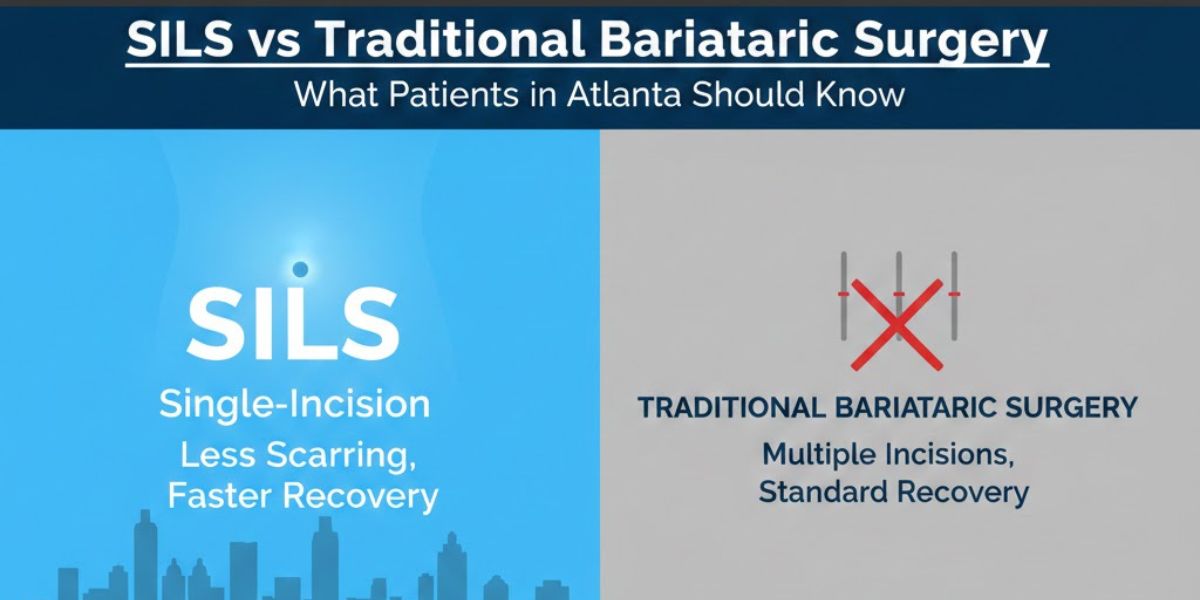
Traditional laparoscopic bariatric surgery usually involves four to six small incisions across the abdomen. Through those incisions, the surgeon inserts a camera and surgical instruments to perform a gastric sleeve or gastric bypass.
SILS uses a different access point.
Instead of several incisions, everything goes through one small opening inside the belly button. The surgery itself doesn’t change. The stomach is altered the same way. The weight-loss results are the same.
The difference is how the surgeon gets there.
Why Some Atlanta Patients Ask About SILS
For a lot of people, it starts with scars.
Traditional laparoscopic scars are small, but they’re still visible. SILS keeps the incision hidden in the belly button, which matters to patients who:
- Spend time at the beach or pool
- Work out regularly
- Prefer privacy about having surgery
- Just don’t want visible reminders on their abdomen
In a city like Atlanta — where active lifestyles, gyms, and warm weather are part of everyday life — that cosmetic detail comes up more often than you might think.
How SILS Actually Works
SILS doesn’t mean “scar-free,” even though it’s often described that way.
During SILS, Dr. Will Johnson makes a single incision, usually about 2–3 centimeters, inside the belly button. A special multi-port device is placed through that opening. From there:
- A camera is inserted
- Surgical instruments are inserted
- The abdomen is gently inflated for visibility
- From that point on, the sleeve or bypass is performed exactly the same way as traditional laparoscopy.
Once the surgery is complete, everything is removed and the incision is closed carefully so it blends into the natural shape of the belly button as it heals.
Is SILS Safer Than Traditional Surgery?
This is where many patients worry.
Here’s the reality:
Is SILS safer than traditional laparoscopic surgery? When done on the right patient by an experienced surgeon, SILS is typically not safer than traditional laparoscopic surgery.
Studies comparing single-incision and multi-incision bariatric surgery show similar complication rates. Things like bleeding, infection, or leaks depend much more on:
- Surgeon experience
- Patient anatomy
- Proper preparation and follow-up
- Not the number of incisions.
This is why candidacy matters so much.
Benefits Patients Often Notice With SILS
For patients who are good candidates, SILS can offer a few advantages:
- One hidden incision instead of several
- Less visible scarring long term
- Fewer incision sites to care for
- Some patients report less early soreness
- More confidence about body appearance after surgery
That said, these benefits are mostly cosmetic and comfort-related, not medical.
When Traditional Laparoscopic Surgery Makes More Sense
SILS is not ideal for everyone.
Traditional laparoscopy may be the better choice if:
- BMI is very high
- There’s a history of multiple abdominal surgeries
- Scar tissue is expected
- Anatomy requires more surgical flexibility
In those situations, having multiple access points can actually make surgery safer and more controlled.
Dr. Johnson is very clear about this during consultations. SILS is offered when it’s appropriate — not by default.
Weight Loss Results: Is There a Difference?
No.
This part is important to understand.
- Weight loss depends on the procedure, not the incision style
- Gastric sleeve and bypass work the same way regardless of access
- Patients typically lose 60–80% of excess weight over 12–18 months
SILS does not change how effective bariatric surgery is.
Choosing Between SILS and Traditional Surgery
- This decision shouldn’t be made online.
- It should be made after reviewing imaging, medical history, prior surgeries, and goals. During a consultation at Bodiatrics, Dr. Will Johnson evaluates whether SILS is a safe option — or if traditional laparoscopy is the better fit.
- Sometimes the answer is clear. Sometimes it’s a discussion.
- Either way, the goal is the same: safe surgery with long-term success.
Why Atlanta Patients Choose Dr. Will Johnson
Dr. Will Johnson is known for offering multiple bariatric approaches — not just one technique for everyone.
Patients appreciate that:
- He has over 20 years of bariatric surgery experience
- He performs SILS, traditional laparoscopic, and robotic procedures
- Recommendations are based on anatomy and safety, not trends
- Care continues long after surgery
- At Bodiatrics, surgery is only one part of the process.

What to Expect at Your Consultation
Your visit won’t feel rushed.
Patients typically review:
- Weight and health history
- Previous surgeries
- Goals and concerns
- Whether SILS is appropriate
- What recovery looks like
- Realistic expectations
You’ll leave knowing which option makes the most sense — and why.
Frequently Asked Questions
Ready to Learn Which Option Is Right for You?
If you’re in the Atlanta area and considering bariatric surgery, the best next step is a consultation with a skilled bariatric surgeon who offers both SILS and traditional approaches.
Dr. Will Johnson | Bodiatrics
📞 (404) 854-4123
🌐 https://www.bodiatrics.com
You’ll get a clear, honest recommendation — and a plan that’s built around your health, not just the scar.