
Robotic Bariatric Surgery in Suwanee, GA: Precision, Smaller Incisions, Faster Recovery
Console-guided precision, enhanced 3D vision and fine surgical control from a board-certified bariatric surgeon.
- Procedure Time
- 1.5 to 3 hours
- Hospital Stay
- 1 to 2 nights
- Anesthesia
- General
- Recovery
- 2 to 4 weeks


What Robotic Bariatric Surgery Offers
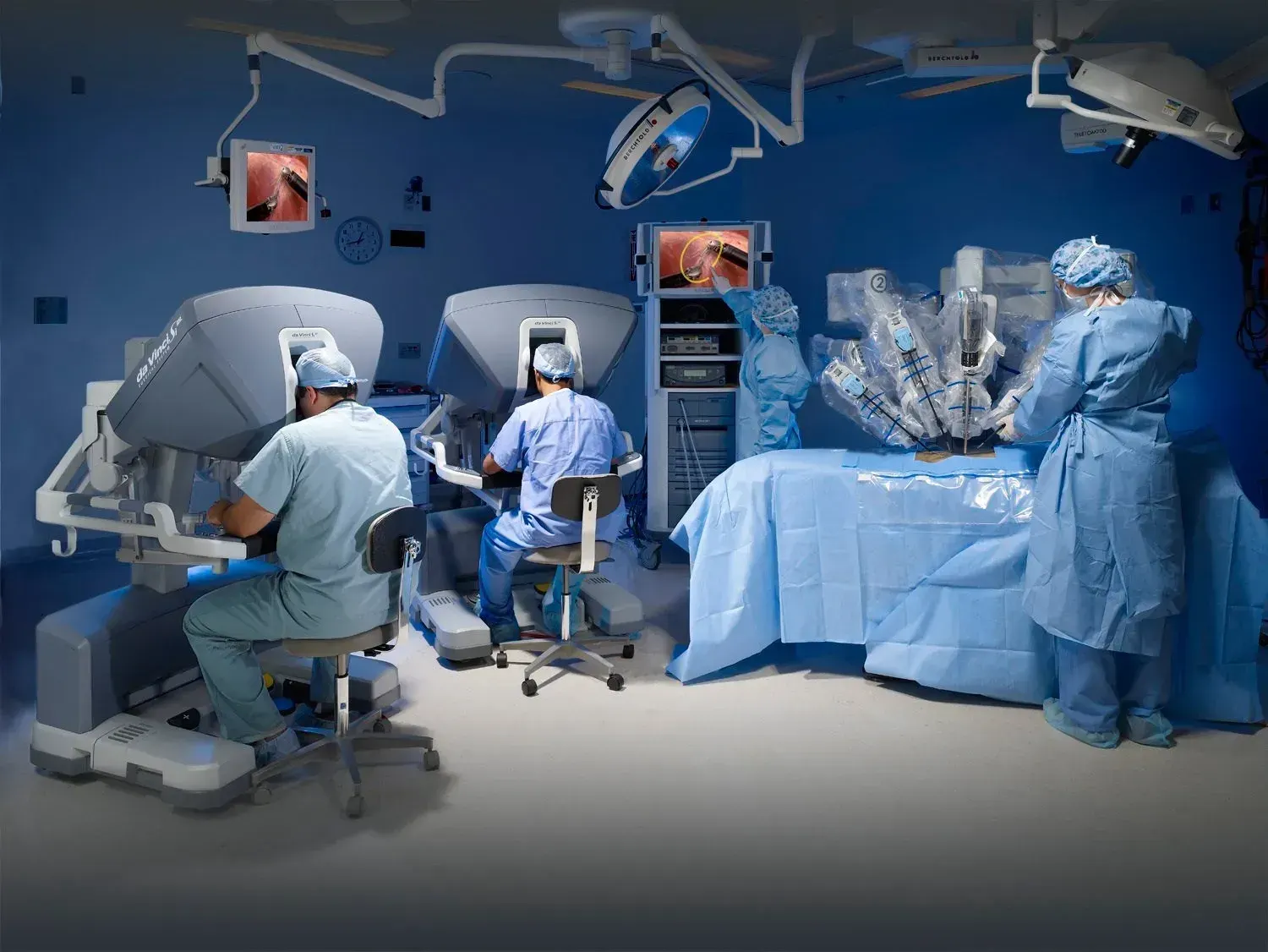
Robotic bariatric surgery in Suwanee, GA is weight loss surgery (gastric sleeve or bypass) performed with a surgeon-controlled robotic system that adds 3D magnified vision and wristed instruments for finer movements through smaller incisions. It refines how each step is performed, not what procedure is done, and recovery is typically faster and more comfortable than with standard laparoscopy. At Bodiatrics, Dr. Will Johnson, MD, FACS treats patients from Johns Creek, Alpharetta, Duluth, Cumming and across Metro Atlanta.
Your care is led by Dr. Will Johnson, MD, FACS, a board-certified bariatric and vein surgeon with more than 20 years of experience and Duke surgical training. As Medical Director of the Vein Center at Johns Creek, he selects robotic or traditional laparoscopic techniques based on your anatomy and history, not on trends.
Why the Robotic Approach Matters in Bariatric Surgery
Most people arrive at bariatric surgery after years of effort. Diets that worked until they stalled, exercise plans that helped a little, and the honest realization that willpower alone was not fixing the problem. When surgery finally enters the conversation, a common question follows: does robotic surgery actually change the outcome? The confusion is understandable. Marketing often frames robotic as automatically safer or faster, which oversimplifies a nuanced surgical decision and can push patients toward a technique that may not fit their specific anatomy or history.
Understanding the real difference
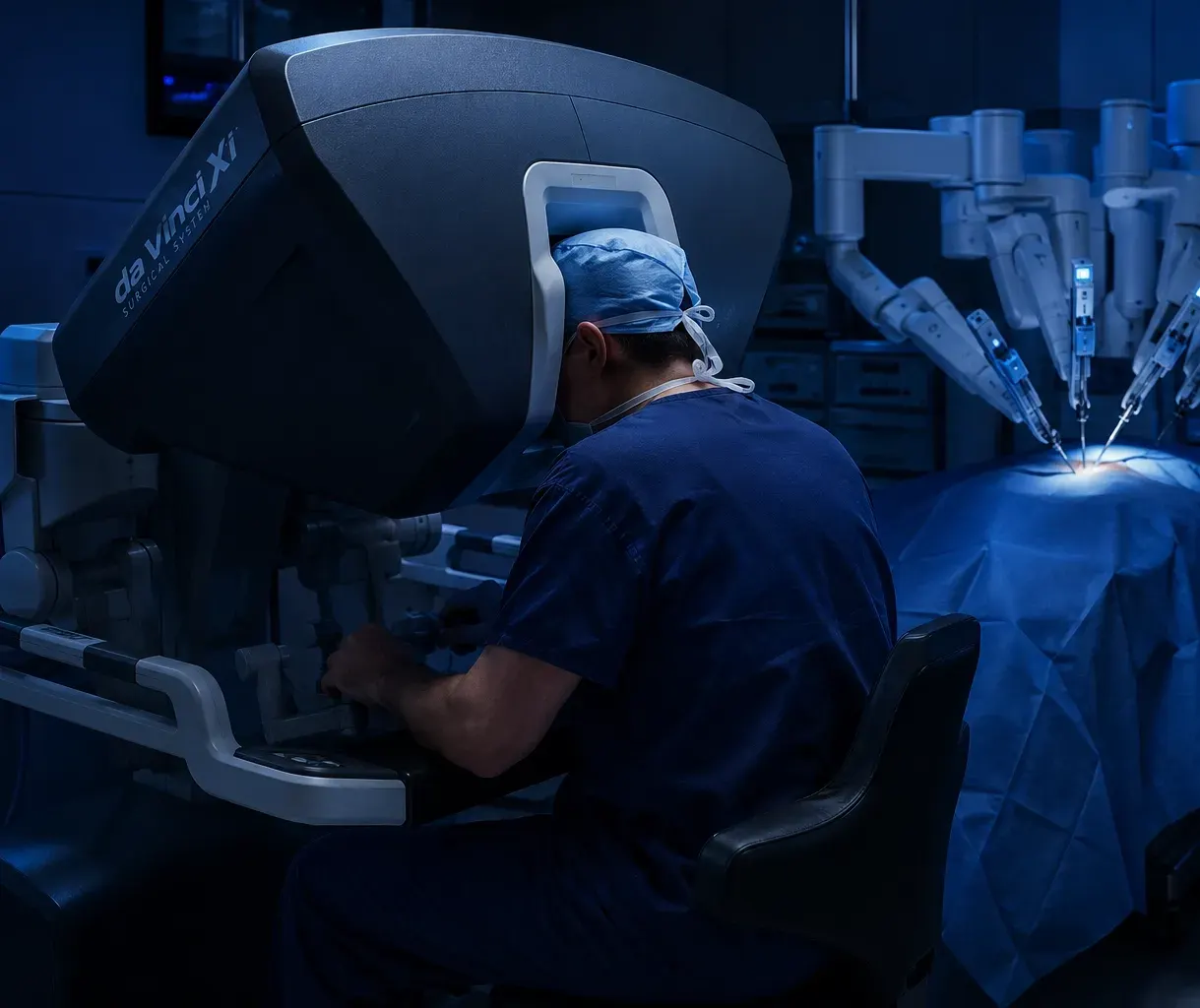
Both robotic and traditional laparoscopic bariatric surgery are minimally invasive and use small incisions. The difference is how the surgeon works. With the robotic approach, the surgeon operates from a console using instruments that offer a greater range of motion and enhanced, often 3D, visualization. The robot does not operate on its own or make decisions, it is a tool guided entirely by the surgeon. For complex anatomy, revision cases and fine suturing, that added precision can mean less tissue stress and more controlled movements. For straightforward cases, outcomes can be nearly identical to traditional surgery.
What Is Robotic Bariatric Surgery?
Robotic bariatric surgery is a minimally invasive procedure performed with a system such as the da Vinci platform: the surgeon works at a console, controlling tiny wristed instruments through small incisions under a magnified 3D view. Both gastric sleeve and gastric bypass can be done this way.
The instruments filter tremor and articulate beyond the human wrist, which helps with suturing and dense scar tissue. The ASMBS accepts robotic and laparoscopic equally. The system never operates on its own, and Bodiatrics offers both approaches within bariatric surgery care.
- Procedure Time
- 1.5 to 3 hours (depending on the procedure)
- Hospital Stay
- 1 to 2 nights (for most patients)
- Back to Walking
- Same day (gentle activity encouraged)
- Full Recovery
- 2 to 4 weeks (back to your normal routine)
Concerns Robotic Bariatric Surgery Helps Address
Robotic surgery does more than add precision - it makes complex weight-loss procedures safer and recovery easier. Dr. Will Johnson at Bodiatrics uses it to address:
-
Severe Obesity
Durable weight loss for adults with clinically significant obesity
-
Complex Anatomy
Precise access when body composition makes standard approaches harder
-
Revision Cases
Fine control for surgery around dense prior scar tissue
-
Metabolic Conditions
Supports improvement in type 2 diabetes, hypertension and sleep apnea
-
Failed Nonsurgical Efforts
An option after diet, exercise and medication have stalled
-
Recovery Concerns
Smaller incisions mean less pain and a faster return to daily life
Benefits of the Robotic Approach
Precision where it counts most
2000+ Satisfied patients






- 01
Enhanced Precision
Wristed instruments and 3D vision improve control on delicate steps
- 02
Smaller Incisions
Minimally invasive ports mean less visible scarring
- 03
Fine Suturing
Superior articulation for reconstruction and complex closures
- 04
Less Tissue Stress
Controlled movements can reduce trauma in complex cases
- 05
Potentially Smoother Recovery
Some patients report less early discomfort after robotic cases
- 06
Tailored Technique
Chosen only when it adds real value for your anatomy
Robotic Bariatric Surgery Compared to Other Options
This comparison shows how robotic technique and specific bariatric procedures differ so you can weigh options with Dr. Johnson.
| Treatment | Mechanism | Time | Results | Duration | Downtime | Best For |
|---|---|---|---|---|---|---|
| Robotic Bariatric Surgery | Console-guided instruments, 3D vision | 1.5-3 hrs | 60-70% excess weight loss | Long-term | 2-4 weeks | Complex anatomy, revisions, precision cases |
| Gastric Sleeve Surgery | Removes about 75% of stomach | 1-1.5 hrs | 60-65% excess weight loss | Long-term | 2-4 weeks | Straightforward primary weight loss |
| Single Incision Bariatric Surgery | One small hidden incision | 1.5-2 hrs | Comparable to standard sleeve | Long-term | 2-4 weeks | Patients prioritizing minimal scarring |
| Gastric Bypass Surgery | Reroutes stomach and small intestine | 2-3 hrs | 65-80% excess weight loss | Long-term | 3-6 weeks | Severe obesity, reflux, type 2 diabetes |

Who Is a Good Candidate for Robotic Bariatric Surgery
Robotic bariatric surgery suits adults who qualify for weight loss surgery and whose case benefits from added surgical precision. Candidacy for the procedure itself is the same as for laparoscopic surgery, and the robotic approach is one delivery method your surgeon may recommend. A consultation for bariatric surgery in Suwanee, GA determines the right fit.
Ideal Candidates for Robotic Bariatric Surgery
- Adults with a BMI of 40 or higher, or 35 or higher with obesity-related conditions
- Patients with complex anatomy or dense scar tissue from prior surgery
- Those needing revision surgery requiring fine suturing and reconstruction
- People who have tried diet, exercise and medication without lasting results
- Candidates committed to long-term nutrition and follow-up care
Who Should Wait or Avoid Robotic Bariatric Surgery
- Those who are pregnant or breastfeeding
- Patients with untreated substance use or unmanaged eating disorders
- People with medical conditions that make general anesthesia unsafe
- Anyone unable to commit to the required lifestyle and dietary changes
Some straightforward cases do just as well with traditional laparoscopy. Dr. Johnson recommends the safest, most effective approach for you, not the one that sounds most impressive.
What Happens During Robotic Bariatric Surgery
Consultation and Planning
Anesthesia and Access
Robotic Procedure
Closure and Recovery
Ongoing Support
Safety, Side Effects and Risks
Honest information
-
Common Temporary Effects
Expect soreness and swelling at the incision sites, fatigue through the first one to two weeks, and nausea or changes in bowel habits as your diet advances. Temporary dietary restrictions apply while you heal. These effects are part of normal recovery and settle steadily as you move through the staged post-operative diet.
-
Less Common Risks
Uncommon risks include bleeding, infection, or a reaction to anesthesia, leaks at staple or suture lines, blood clots, and rarely the need for additional surgery. Complication rates are tied more to surgeon experience, case volume, pre-operative preparation, and follow-up than to whether a robotic or laparoscopic tool was used.
-
Safety and Oversight
Both robotic and traditional bariatric surgery are considered very safe when performed by experienced surgeons at accredited centers. For general information on bariatric surgery safety, the American Society for Metabolic and Bariatric Surgery is a reliable resource, and Dr. Johnson reviews your individual risk profile in detail at consultation.

How Much Does Robotic Bariatric Surgery Cost
Understanding your investment
The cost of robotic bariatric surgery depends on the specific procedure, your anatomy and whether insurance applies. Importantly, insurance coverage is usually based on the procedure performed, such as sleeve or bypass, rather than on the robotic approach itself. The Bodiatrics team helps clarify your coverage during consultation.
What Affects Your Cost
- The specific bariatric procedure recommended for you
- Insurance coverage and out-of-pocket requirements
- Pre-op testing, nutrition support and follow-up care
- Any revision or complexity considerations
We do not publish fixed prices because every plan is individualized. Self-pay and cash-pay options are available, and flexible financing through Cherry and CareCredit can spread the cost into manageable monthly payments. Explore your payment options on our bariatric surgery financing page, and your exact investment is discussed at your consultation.
Why Choose Bodiatrics for Robotic Bariatric Surgery in Suwanee, GA
Surgeon-led, whole-person care
-
Board-Certified Surgeon
20+ years, Duke-trained, dedicated bariatric expertise
-
Both Techniques Offered
Robotic or traditional, chosen for your case not for marketing
-
Whole-Person Program
Surgery paired with nutrition, coaching and metabolic testing
-
Honest Guidance
Clear options and realistic expectations with no pressure
Related Treatments
Complementary treatments to support your goals.
 Featured treatment Gastric Sleeve Surgery A minimally invasive sleeve gastrectomy that reduces stomach size to support steady, durable weight loss.
  Featured treatment Single Incision Bariatric Surgery A single incision gastric sleeve performed through one small opening hidden inside the belly button, for the same results with a nearly invisible scar.
 Robotic Bariatric Surgery FAQ
Answers to what patients ask most
Is robotic bariatric surgery safer than traditional surgery?
Both approaches are very safe when performed by an experienced bariatric surgeon at an accredited center. Safety depends more on surgeon expertise, case volume and follow-up care than on the technology itself. Robotic tools can add precision in complex cases, but for many patients traditional laparoscopy is equally safe and effective.
Does robotic surgery mean faster weight loss?
No. Weight loss depends on the procedure chosen and your long-term follow-through, not the surgical tool. A robotic gastric sleeve and a laparoscopic gastric sleeve produce comparable results. Nutrition, coaching and monitoring body composition matter far more to your outcome than whether a robot was used.
Is robotic surgery more expensive for me?
Usually not for the patient. Insurance coverage is typically based on the procedure performed, such as sleeve or bypass, rather than the robotic approach. During your consultation the Bodiatrics team clarifies your coverage and reviews self-pay and financing options through Cherry and CareCredit.
Can I choose robotic or traditional surgery?
You can share your preferences, but the final recommendation is based on what is safest and most effective for your anatomy and history. Dr. Johnson offers both approaches and selects the one that gives you the best chance at long-term success rather than the one that sounds most impressive.
Do all Bodiatrics patients have robotic surgery?
No. Some patients are better served with traditional laparoscopy, especially for straightforward cases where outcomes are nearly identical. Bodiatrics offers both robotic and traditional bariatric surgery on purpose because weight loss is not a one-technique problem.
How long does robotic bariatric surgery take?
Most procedures take about 1.5 to 3 hours depending on whether a sleeve, bypass or revision is performed. Most patients stay one to two nights in the hospital and begin gentle walking the same day. Full return to a normal routine usually takes two to four weeks.
How much weight will I lose after robotic bariatric surgery?
Results vary by procedure and individual, but many patients lose 60 to 80 percent of their excess weight over 12 to 18 months. The fastest changes occur in the first three to six months. Long-term success depends on consistent nutrition, activity and follow-up care.
Will robotic surgery leave smaller scars?
Robotic surgery uses several small keyhole incisions, similar to laparoscopic surgery, so scarring is minimal. If minimal scarring is your priority, ask Dr. Johnson about single incision bariatric surgery, which hides the incision in the navel. Your surgeon will explain which option fits your goals.
Am I a good candidate for robotic bariatric surgery?
Candidates are generally adults with a BMI of 40 or higher, or 35 or higher with obesity-related conditions, who have struggled with nonsurgical weight loss. Robotic technique is especially useful for complex anatomy and revisions. A consultation with Dr. Johnson confirms whether it is right for you.
What follow-up care is included after surgery?
Surgery at Bodiatrics is part of a long-term plan. You will have access to nutrition and lifestyle coaching, metabolic testing and body composition monitoring. This whole-person support, not just the operation, is what helps patients maintain their results over time.
Schedule Your Robotic Bariatric Surgery Consultation
References
- Chang et al., JAMA Surgery. (2014). Systematic review and meta-analysis found bariatric surgery is effective with low perioperative mortality of about 0.1 to 0.3 percent. PMID: 24352617.
- Peterli et al., JAMA. (2018). SM-BOSS randomized trial showed comparable 5-year weight loss between sleeve gastrectomy and Roux-en-Y gastric bypass. PMID: 29340679.
- Salminen et al., JAMA. (2018). SLEEVEPASS randomized trial found sleeve gastrectomy and gastric bypass produced similar 5-year weight loss. PMID: 29340676.
- Schauer et al., N Engl J Med. (2017). STAMPEDE 5-year data showed bariatric surgery plus medical therapy beat medical therapy alone for glycemic control in type 2 diabetes. PMID: 28199805.
- American Society for Metabolic and Bariatric Surgery. Patient resources on bariatric surgery approaches and safety. asmbs.org.