
Low Bone Density Testing in Suwanee, GA: Know Your Bone Density Before It Breaks
Catch Bone Loss Early
- Common In
- Women 50+, Men 65+
- Primary Causes
- Aging, Hormones, Nutrition
- Treatment Time
- 10-20 minute scan
- Results
- Same-day T-score




What Is Low Bone Density?
Low bone density testing in Suwanee, GA at Bodiatrics measures how dense and strong your bones are, most often through a DEXA scan. Because bone loss is silent, screening is the only reliable way to catch it before a fracture reveals the problem. We test patients from Johns Creek, Alpharetta, Duluth, Cumming and across Metro Atlanta.
Osteoporosis means porous bone: over time, bone breaks down faster than the body rebuilds it, leaving the internal structure thin and fragile. Many people feel completely normal even as their bone density quietly declines year after year.
Recognizing the Signs
Often the first sign is a broken wrist, hip, or spine from a minor fall or even a hard cough. A simple, painless screening changes that story by giving you and Dr. Will Johnson a clear number to act on long before a fracture happens.

Why Bone Density Declines
Understanding the Root Causes
Bone is living tissue in constant turnover: specialized cells remove old bone while others lay down new bone. Peak bone mass arrives around age 30, and after that most adults lose roughly 0.5 to 1 percent of bone density each year, with sharper losses in the years after menopause.
When breakdown outpaces rebuilding, the internal lattice of the bone thins and its connecting struts weaken. The bone can look normal from the outside while losing much of the strength that protects it from everyday stress. The NIH Osteoporosis and Related Bone Diseases National Resource Center notes this loss is typically painless until a fracture occurs.
Falling estrogen or testosterone, low calcium and vitamin D, inactivity, smoking, and excess weight loss can all accelerate the process. Understanding your metabolic and hormonal picture through comprehensive bloodwork and lab panels helps identify the drivers behind your bone loss so they can be addressed.
What Accelerates Low Bone Density?
Identifying Your Triggers
Several factors work together to speed up bone loss, and many can be measured and managed once a screening reveals where you stand.
-
Aging
After about age 30, bone rebuilding slows and gradual density loss becomes a normal part of aging for everyone.
-
Hormonal Changes
Falling estrogen after menopause and declining testosterone in men both accelerate bone breakdown significantly.
-
Nutritional Gaps
Low calcium and vitamin D deprive bone of the raw materials it needs to rebuild and stay strong.
-
Inactivity
Without regular weight-bearing and resistance activity, bones receive less of the stress that signals them to stay dense.
-
Family History
A parent with osteoporosis or a hip fracture raises your own risk of low bone density.
-
Lifestyle Habits
Smoking, heavy alcohol use, and rapid or extreme weight loss can each weaken bone over time.
Why Early Screening Matters
How Testing Protects Your Future
Osteoporosis is often called a silent disease because there are no symptoms until a bone breaks. By the time a fracture happens, significant bone strength has already been lost, and hip and spine fractures can seriously limit mobility and independence.
A DEXA scan for bone density and body composition gives you a precise baseline measured as a T-score, so subtle changes can be tracked over time rather than discovered too late. Screening turns bone health from a guessing game into a number you can monitor and improve.
Bone health rarely stands alone. Nutrition, hormones, muscle mass, and body composition all influence it, which is why screening fits naturally into a whole-person longevity plan. Pairing bone density data with resting metabolic rate testing helps Dr. Johnson build strategies that protect both your bones and your metabolic health.
Why Choose Bodiatrics for Low Bone Density Testing in Suwanee, GA
Expert Care in Suwanee
-
Physician-Led Care
Dr. Johnson personally interprets your results and explains what your T-score means for your health.
-
Advanced DEXA Technology
Precise, low-dose DEXA scanning delivers accurate bone density and body composition data quickly.
-
Whole-Person Insight
We connect bone health to your nutrition, hormones, and body composition, not just a single number.
-
Clear Action Plan
You leave with a plan to track, protect, and improve your bone density over time.
Screening and Testing Options
Compare the tests we use to assess and support bone health so you can understand what each one measures.
| Treatment | How It Works | Best For | Downtime | Results Timeline |
|---|---|---|---|---|
| DEXA Scan | Low-dose X-ray measures bone density | Baseline bone strength | None | Same day |
| Comprehensive Bloodwork and Lab Panels | Blood analysis of key markers | Vitamin D and hormones | None | A few days |
| RMR Testing | Measures resting calorie burn | Metabolic and nutrition planning | None | Same day |
You May Benefit From Low Bone Density Testing If...
Recognizing When to Seek Help
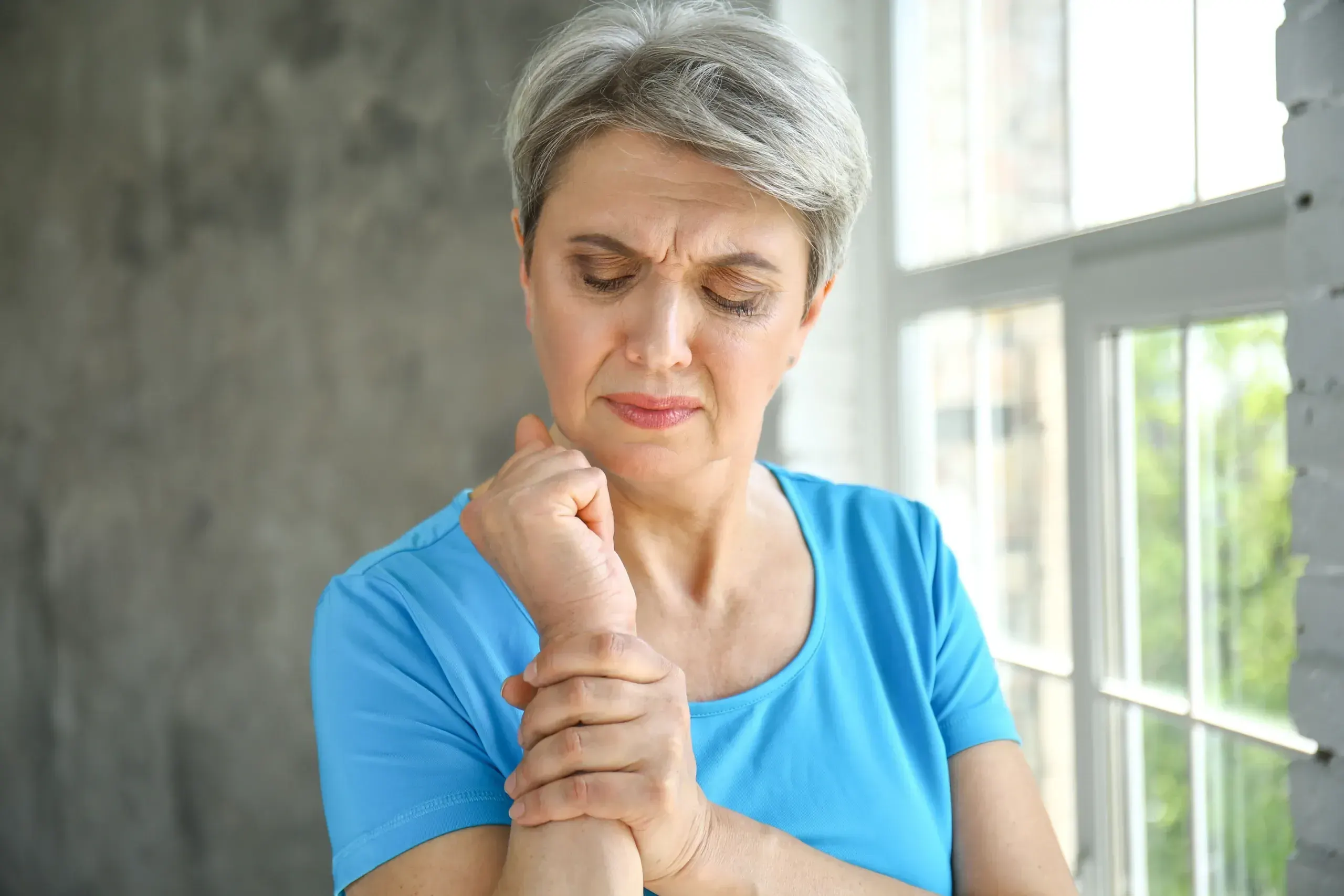
Because low bone density is silent, screening is guided by risk rather than symptoms. If any of the signs below apply to you, a bone density screening at our DEXA scan and body composition testing can give you clarity.
- Post-Menopausal
- Age Milestone
- Recent Fracture
- Height Loss
- Family History
- Risk Medications
Services That Treat This
How we help, matched to your needs.

Frequently Asked Questions
About Low Bone Density
What is a bone density test and how does it work?
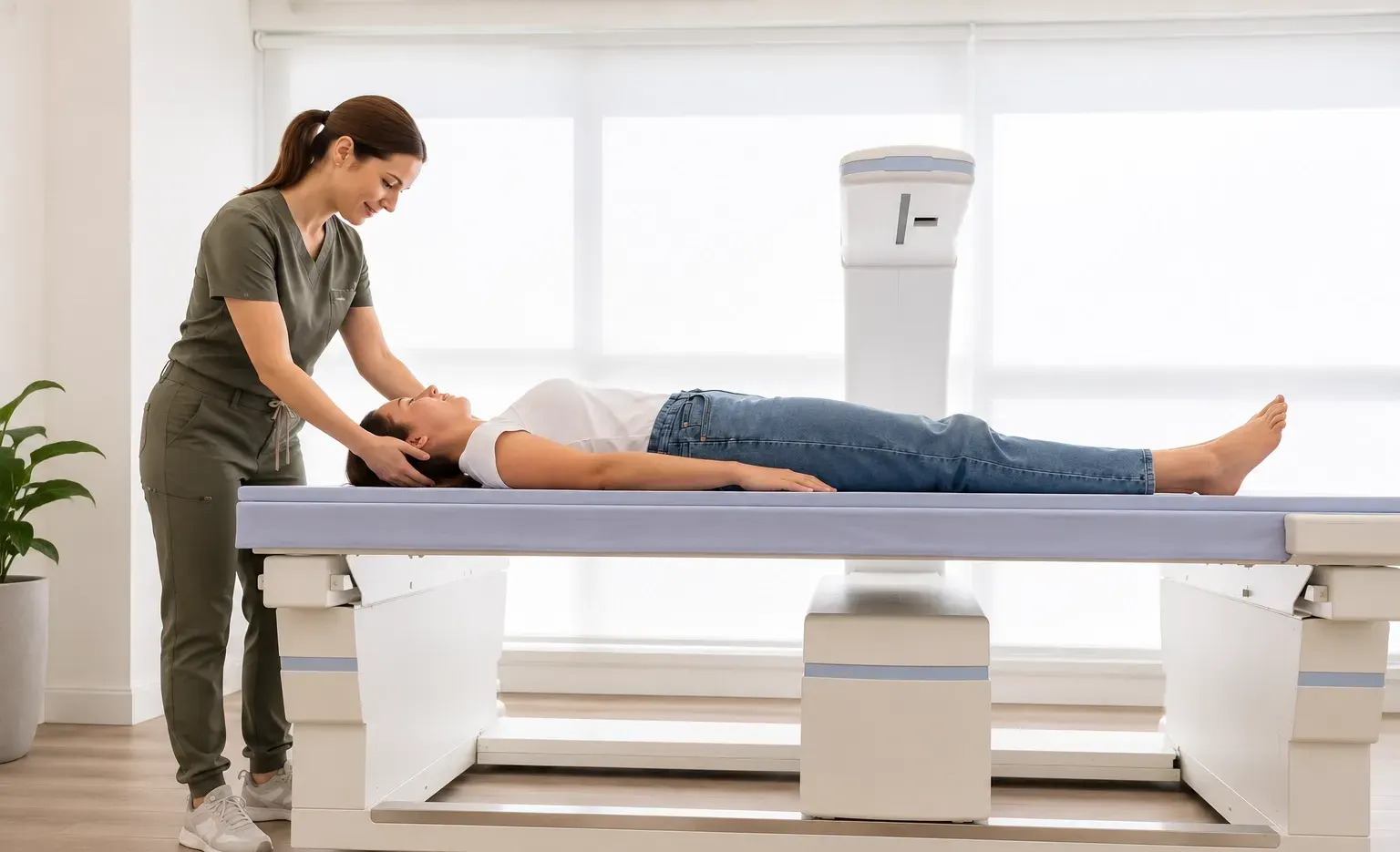
A bone density test, most often a DEXA scan, uses a very low dose of X-ray to measure the mineral density of your bones, usually at the hip and spine. It is quick and painless, taking about 10 to 20 minutes while you lie still, and produces a T-score that shows how your bone strength compares to healthy young adults.
When should I get a bone density test?
Most guidelines recommend bone density testing for women at age 65 and men at age 70, and earlier for those with risk factors such as early menopause, family history, low body weight, smoking, or certain medications. If you have already had a fracture from a minor fall, testing is important regardless of age. Dr. Johnson can help decide the right timing for you.
Does low bone density have any symptoms?
No, low bone density usually has no symptoms at all, which is why it is called a silent disease. You cannot feel your bones weakening, and most people have no warning until a bone breaks from a minor fall or bump. Screening is the only reliable way to detect bone loss before a fracture occurs.
Can I improve my bone density if screening finds a problem?
Yes, in many cases bone loss can be slowed and sometimes partly reversed. Weight-bearing and resistance exercise, adequate calcium and vitamin D, and correcting hormonal or nutritional gaps all help. Bloodwork and body composition testing let us tailor a plan, and knowing your baseline lets us track whether it is working.
What does the T-score from my screening mean?
Your T-score compares your bone density to that of a healthy young adult. A score of minus 1.0 or above is considered normal, between minus 1.0 and minus 2.5 indicates low bone mass, and minus 2.5 or below indicates osteoporosis. Dr. Johnson reviews your score in the context of your overall health and risk factors.
Is a DEXA scan safe?
Yes, a DEXA scan is very safe. It uses a much lower dose of radiation than a standard chest X-ray, and the scan is quick and completely painless. There is no injection and no recovery time, so you can return to your normal activities immediately afterward.
How does weight and metabolic health affect my bones?
Weight and metabolic health are closely tied to bone strength. Very low body weight, rapid weight loss, and poor nutrition can weaken bone, while muscle-supporting activity helps protect it. This is why we assess bone density alongside body composition and metabolic testing to protect your whole-body health.
Schedule Your Consultation
Scientific References
- NIH Osteoporosis and Related Bone Diseases National Resource Center. (2023). Overview of osteoporosis as a silent disease and the role of bone density testing in early detection.
- International Society for Clinical Densitometry. (2023). Official positions on DEXA bone mineral density measurement and T-score interpretation.
- Bone Health and Osteoporosis Foundation. (2023). Patient guidance on bone density testing, who should be screened, and understanding results.