
What Can a DEXA Scan Show? Cancer, Arthritis and What It Actually Measures
Can a DEXA scan show cancer or arthritis? A board-certified physician explains what DEXA actually measures, what it cannot detect, and how to read your body fat, visceral fat, T-score and Z-score results.
A DEXA scan measures two things with high precision: your body composition (body fat percentage, lean muscle mass, and visceral fat) and your bone mineral density. It does not diagnose cancer, and it is not a screening test for it. DEXA is the clinical gold standard for tracking fat, muscle, and bone health over time. If a scan reveals something unexpected, your physician refers you for the proper imaging, such as an MRI, CT, or mammogram, to investigate further.
What a DEXA Scan Actually Measures
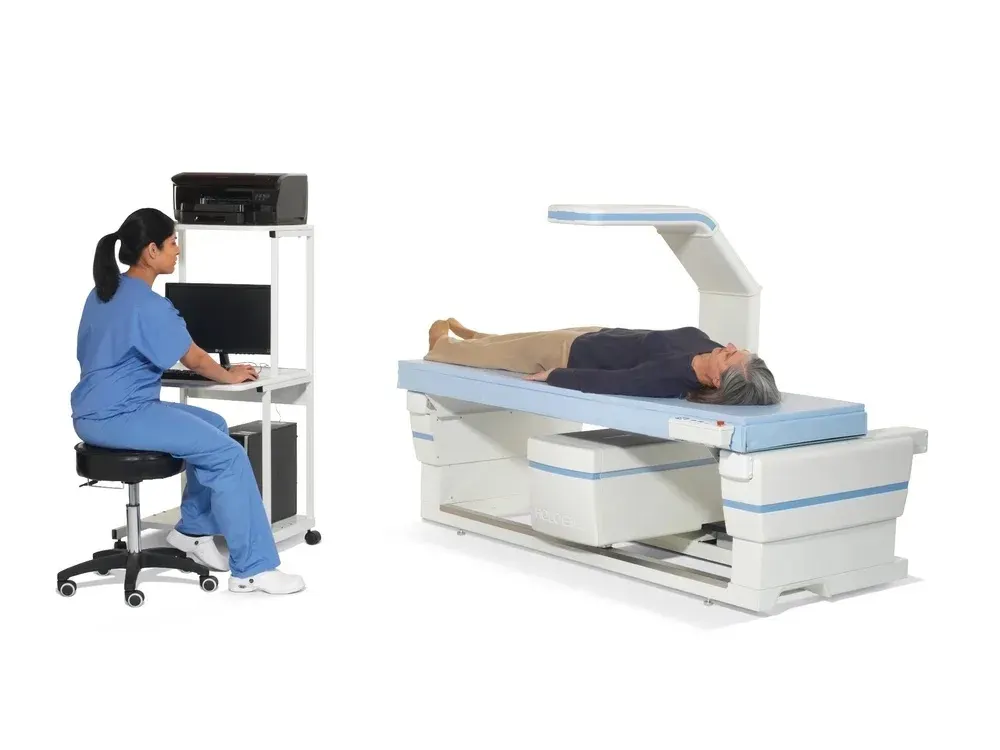
DEXA stands for Dual-Energy X-ray Absorptiometry. It uses two low-dose X-ray beams at different energy levels to distinguish between fat, lean tissue, and bone. The scan was originally developed to measure bone density, but modern software now produces a detailed map of your body composition. That combination is why physicians value it so highly for weight management and longevity care.
A DEXA scan reports total body fat percentage, lean muscle mass, and how that muscle is distributed between your arms, legs, and trunk. It also measures visceral fat, the metabolically active fat wrapped around your internal organs. Two people can weigh exactly the same and have very different profiles: one with strong muscle and low visceral fat, the other carrying hidden fat around the organs. The scale cannot tell those two apart. A DEXA scan can. It is the foundation of baseline health and metabolic testing because it turns a single number on the scale into an accurate, actionable picture of what is happening inside your body.
Can a DEXA Scan Show Cancer? The Honest Answer
No. A DEXA scan cannot detect or diagnose cancer, and it should never be used or interpreted as a cancer screening tool. This is one of the most common questions patients ask, and the honest, medically accurate answer matters. DEXA uses a very low radiation dose and low image resolution specifically to measure tissue density, not to visualize tumors, masses, or soft-tissue abnormalities the way a diagnostic CT, MRI, PET, or mammogram is designed to.
There is one honest caveat. Because a DEXA scan captures bone and tissue in the field of view, a technologist or physician may occasionally notice something that looks unusual, known as an incidental finding. When that happens, it is never treated as a diagnosis. Instead, your physician refers you for the appropriate diagnostic imaging so the finding can be properly evaluated. If cancer is a concern for you, talk to your doctor about the screening tests that are actually validated for it. A DEXA scan is not one of them.
Can a DEXA Scan Show Arthritis?
Not directly. Arthritis is a disease of the joints, and diagnosing it requires imaging that shows the joint space, cartilage, and soft tissue, typically an X-ray of the specific joint, an MRI, or a clinical exam. A standard DEXA scan is designed to measure bone mineral density and body composition, not to evaluate joint inflammation or cartilage wear.
There is a useful nuance. Advanced arthritis or changes in the spine and hips can sometimes affect the accuracy of a bone density reading in those exact regions, which is why a trained physician interprets the scan rather than reading the numbers in isolation. But the DEXA scan itself is not a test for arthritis. If joint pain is your concern, the right path is a joint-specific evaluation. What DEXA does well is quantify the bone density and muscle mass that support your joints, which is valuable context for anyone managing weight-related joint stress.
What a DEXA Scan Is the Gold Standard For
DEXA earns its reputation in two areas. First, body composition. Compared with tape measures, BMI, or handheld devices, DEXA delivers a precise, repeatable breakdown of fat, muscle, and visceral fat, which is exactly the data a physician needs to protect muscle during weight loss and reduce dangerous visceral fat. Second, bone health. DEXA is the reference standard for measuring bone mineral density and identifying low bone density and osteoporosis risk before a fracture ever happens.
These two strengths are why a scan is central to a data-driven weight and longevity program. At Bodiatrics we use a DEXA scan in Suwanee, GA to establish an accurate baseline, and we use the bone density data for low bone density testing with DEXA so patients catch bone loss early, when it is most treatable. According to the International Society for Clinical Densitometry, DEXA remains the standard reference method for both bone density assessment and body composition analysis (ISCD).
How to Read Your DEXA Scan Results
A DEXA report can look intimidating, but it comes down to a few key numbers. For bone density, the two figures that matter most are your T-score and your Z-score.
Your T-score compares your bone density with that of a healthy young adult at peak bone mass. Per World Health Organization criteria used by clinicians, a T-score of -1.0 and above is considered normal, between -1.0 and -2.5 indicates low bone mass (osteopenia), and -2.5 or lower is classified as osteoporosis. Your Z-score compares your bone density with what is expected for someone of your same age, sex, and body size, and it is especially useful for younger adults and for flagging causes of bone loss beyond normal aging.
For body composition, focus on your body fat percentage (the share of your total weight that is fat), your lean mass (muscle and other non-fat tissue), and your visceral fat rating. Visceral fat is often reported as an area or mass measurement, and a rising number is a stronger warning sign for metabolic disease than overall weight. The real value comes from repeat scans: watching fat mass fall while lean mass holds steady is the signature of a healthy, muscle-sparing weight loss plan. The National Institutes of Health maintains patient-friendly explanations of bone density scores and osteoporosis risk (NIH Bone Health resources).
How Often Should You Get a DEXA Scan?
It depends on why you are scanning. For bone density and osteoporosis monitoring, physicians typically repeat a DEXA scan every one to two years, since bone changes slowly and more frequent testing rarely adds useful information. For body composition during an active weight loss or muscle-building program, scans are often repeated every three to six months, because fat and muscle can change meaningfully within that window.
The goal of a follow-up scan is not just to see the number move. It is to confirm that the number is moving in the right way, with fat mass decreasing and lean muscle mass preserved. That distinction is impossible to see on a bathroom scale and is one of the main reasons a physician-guided program uses DEXA to adjust nutrition, medication, and training over time.
How Accurate Is DEXA vs Smart Scales and InBody?
DEXA is significantly more accurate and repeatable than the alternatives most people encounter. Smart scales and handheld bioelectrical impedance devices estimate body fat by sending a small electrical current through the body, and their readings can swing based on hydration, recent meals, and even the time of day. They are convenient for spotting broad trends but are not precise enough for clinical decisions.
InBody and similar professional impedance analyzers are a step up and useful for frequent tracking, but they still rely on estimation rather than direct measurement. DEXA physically measures the density of fat, lean tissue, and bone, which is why it is used as the reference against which other methods are validated. If you want a single, trustworthy baseline, DEXA is the standard. Many patients then use a smart scale between scans to watch trends and return for a DEXA scan to confirm what is truly changing.
Frequently Asked Questions About DEXA Scans
Does a DEXA scan show cancer?
No. A DEXA scan does not show or diagnose cancer and is not a cancer screening test. It is designed to measure bone density and body composition using very low radiation. If an incidental finding appears, your physician refers you for proper diagnostic imaging such as CT, MRI, or mammography to investigate it correctly.
Does a DEXA scan show arthritis?
Not directly. Arthritis is diagnosed with joint-specific X-rays, MRI, or a clinical exam, not with a bone density scan. Advanced arthritis in the spine or hips can affect the accuracy of a density reading in those areas, which is why a trained physician interprets your scan rather than reading numbers alone.
What does a DEXA scan show?
A DEXA scan shows your bone mineral density and a detailed body composition breakdown, including total body fat percentage, lean muscle mass, muscle distribution, and visceral fat around your organs. It is the clinical gold standard for both osteoporosis risk assessment and accurate body composition tracking over time.
How do I read my DEXA scan results?
Focus on your T-score and Z-score for bone density, and your body fat percentage, lean mass, and visceral fat for body composition. A T-score of -1.0 or above is normal, and -2.5 or lower indicates osteoporosis. Your physician explains what your specific numbers mean for your plan.
How often should I get a DEXA scan?
For bone density monitoring, most people repeat a DEXA scan every one to two years. For tracking body composition during an active weight loss or fitness program, scans are often repeated every three to six months so you can confirm you are losing fat while preserving muscle.
Are DEXA scans accurate?
Yes. DEXA is the reference standard for measuring body composition and bone density, and it is more accurate and repeatable than smart scales or bioelectrical impedance devices like InBody. Because it directly measures tissue density rather than estimating it, DEXA is the method other body composition tools are validated against.
Is a DEXA scan safe?
Yes. A DEXA scan is non-invasive, painless, and uses a very low dose of radiation, far less than a standard chest X-ray or most other imaging tests. You simply lie still on a table for about ten to fifteen minutes while the scanner passes over your body.
Does DEXA replace regular cancer screening?
No. A DEXA scan is not a substitute for validated cancer screenings such as mammograms, colonoscopies, or low-dose CT for eligible patients. Continue your recommended screenings with your primary care physician. DEXA measures body composition and bone health, which are different clinical questions entirely.
Book Your DEXA Scan in Suwanee, GA
If you want to move beyond the number on the scale and understand what is truly happening inside your body, a scan is the clearest place to start. At Bodiatrics, Dr. Will Johnson, MD, FACS, a board-certified surgeon with more than 20 years of experience, uses a DEXA scan in Suwanee, GA to build an accurate baseline for weight loss, muscle preservation, and long-term longevity, proudly serving patients from Johns Creek, Alpharetta, Duluth, Cumming, and across Metro Atlanta. To protect your bone health as you age, ask us about low bone density testing with DEXA, or explore our full range of baseline health and metabolic testing. Call (404) 854-4123 to schedule your visit.
This article is for educational purposes only and is not medical advice. A DEXA scan is a diagnostic tool for body composition and bone density and is not used to diagnose cancer or arthritis. Always consult a qualified physician about your individual health concerns and appropriate screening tests.